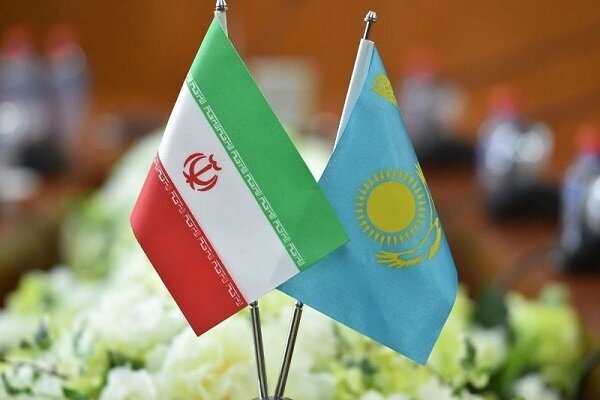
TEHRAN- Mohammad Ali Dehghan Dehnavi, Iranian deputy industry, mining, and trade minister and the head of Iran’s Trade Promotion Organization (TPO), said the visit by President Masoud Pezeshkian and a senior delegation to Kazakhstan reflects the two countries’ determination to expand broad-based economic cooperation.
Making the remarks in an Iran-Kazakhstan business conference in the Kazakh capital Astana on December 11, the official said Iran is ready to deepen industrial, mining and trade ties with Kazakhstan, citing strengths in petrochemicals, mining, machinery, pharmaceuticals, food products and engineering services.
Dehnavi added that Iran is also prepared to meet part of its industrial needs through Kazakhstan’s export capacities, saying negotiations during the forum could help strengthen economic, social and cultural relations.
Bilateral trade between Iran and Kazakhstan stands at about $350 million, a level analysts say could rise several fold in the near term.
The Iran-Kazakhstan business conference in Astana was participated by the presidents of both countries, senior ministers, private sector officials, and business delegations from the two countries in attendance, seeking to deepen commercial ties.
Officials from Kazakhstan’s National Chamber of Entrepreneurs, Iran Chamber of Commerce, Industries, Mines and Agriculture (ICCIMA) and representatives of Iranian and Kazakh companies also attended the event.
Speaking at the conference, Iranian President Masoud Pezeshkian said Iran aims to build a stable network of cooperation and mutual investment between the private sectors of the two countries, calling the Central Asian nation a strategic partner.
He said Iran backs any joint initiative that raises living standards, adding that Tehran sees no limit to expanding ties. He noted that the relationship is rooted in shared history, cultural links, and long-standing mutual respect.
Pezeshkian said recent steps, including transport agreements, easier business visas, and expanded customs cooperation, have created momentum for stronger economic ties. He said new documents signed during the visit could further support private-sector activity.
He urged full implementation of agreements reached in the joint economic committee and said bilateral trade, which reached only three hundred and forty million dollars in 2024, remains far below potential.
The president called for coordinated public and private-sector efforts to meet the three-billion-dollar trade target and highlighted transport links as the driving force of regional connectivity.
He said Iran and Kazakhstan can form a key Eurasian bridge by activating transit corridors linking Central Asia, the Persian Gulf, and the Indian Ocean.
Pezeshkian listed cooperation opportunities in energy, agriculture, industry, technology, tourism, and engineering services, saying Iranian companies are ready to participate in joint projects. He welcomed investment from both countries and said Iran is prepared to resolve administrative and banking challenges with Kazakh partners.
He cited feasible projects including a joint Caspian shipping consortium, storage and distribution facilities in Aktau, joint food and packaging plants, an Iranian building-materials export hub in Almaty, and mineral-processing ventures.
He also backed creating a joint business council, expanding direct flights, easing business visas, and establishing permanent trade exhibitions. He expressed hope the forum would lead to formal agreements, joint companies, and a visible rise in trade volumes.
Kazakhstan’s President Kassym-Jomart Tokayev, for his part, said his country is ready to work with Iran to expand port terminals and develop a multi-directional corridor linking Central Asia to the Persian Gulf.
He said bilateral trade has already exceeded three hundred and forty million dollars and is expected to multiply this year. Kazakhstan aims to raise trade to one billion dollars initially and later to two billion dollars.
Tokayev said a Kazakhstan trade house in Tehran will enable direct, stable supply of agricultural goods to Iran. He said Iran has invested more than two hundred and twenty-six million dollars in Kazakhstan, where over three hundred and fifty Iranian companies are active.
He highlighted Kazakhstan’s efforts to attract foreign investment through a special investment council and the expansion of the national digital platform.
Tokayev said logistics is a priority for bilateral cooperation and noted readiness to partner with Iran on port terminals, logistics upgrades, and increased transit volumes. He called the Kazakhstan–Turkmenistan–Iran railway a key link in the emerging corridor.
Addressing the same conference, ICCIMA Head Samad Hassanzadeh outlined four key obstacles to Iran–Kazakhstan trade and called for joint planning and stronger private-sector involvement to remove them. He said completion of the North–South Corridor infrastructure should be a top priority.
He said the current bilateral trade of roughly three hundred and fifty million dollars could grow several-fold in the short term, given existing potential and political backing.
Hassanzadeh said the presence of senior officials at the forum underscored shared determination to expand economic ties, noting Kazakhstan’s importance as a major Central Asian economy and strategic partner.
He said proximity, stable political ties, and opportunities in energy, agriculture, mining, Caspian shipping, petrochemicals, metals, food industries, engineering services, and pharmaceuticals provide a strong basis for deeper cooperation.
On the sidelines of the conference, Iran’s transport and Urban Development Minister met Kazakhstan’s transport minister to review transit, rail, road, and air cooperation between the two countries.
Farzaneh Sadegh held talks with Nurlan Sauranbayev on strengthening transport links and expanding cooperation on the North–South and East–West corridors.
The two sides discussed improving logistics centers from China’s border in Kazakhstan to Iran’s southern ports and increasing truck movements by removing road-transport barriers.
They also stressed the need to expand rail cooperation in bilateral trade and transit. In aviation, they discussed increasing passenger flights to support business and tourism travel.
Meanwhile, private-sector representatives from both countries signed nine cooperation agreements during the visit of Iranian delegation to Kazakhstan.
The delegation, that was accompanying President Masoud Pezeshkian in his visit to Kazakhstan, was led by ICCIMA Head Samad Hassanzadeh, and included chamber officials and business representatives from engineering services, agriculture, food industries, mining and mineral sectors. Participants held B2B meetings with Kazakh counterparts to explore joint projects.
The Iran Chamber of Commerce signed three memorandums of cooperation, including two with KazTrade and the Kazakhstan Trade Development Council and one with the National Chamber of Entrepreneurs Atameken, covering trade data exchange, business delegations, logistics and green freight transport.
Six additional agreements were signed between Iranian and Kazakh companies in sectors including agriculture, mining, copper production and food processing. One of the deals is valued at more than $1 billion.
Back in mid-September, Iran’s commercial attaché in Kazakhstan said that Kazakhstan continues to seek imports of petrochemical products from Iran, despite its own investment in domestic production.
Speaking at a webinar on petrochemical trade challenges between the two countries, Nasrin Pabarja outlined Kazakhstan’s market structure and said demand remains for Iranian products.
She noted that Kazakhstan, one of Central Asia’s largest economies with vast oil and gas reserves, is aiming to become a regional player in petrochemical production and exports by attracting investment and joint ventures.
Its geographic position and access to Eurasian Economic Union markets, along with proximity to China and Russia, support that ambition, she said.
Kazakhstan’s petrochemical market structure is divided into three main categories: polymers and plastics, basic chemicals, and high value-added downstream products, she explained.
Despite projects such as polyethylene production, demand for these products in industries remains high, making them among the country’s top imports, she added.
Pabarja also highlighted Kazakhstan’s potential to act as a re-export hub for Iranian petrochemical products to other Central Asian countries and China.
“Although Kazakhstan is a consumer market, its geographic and logistical advantages could turn it into a platform for re-exporting Iranian goods,” she said.
The session also reviewed challenges in Iran-Kazakhstan trade and explored the export advantages of both countries in the petrochemical sector.
In early August, Iran’s Minister of Transport and Urban Development Farzaneh Sadegh and Kazakhstan’s Minister of Transport Nurlan Sauranbayev agreed to strengthen transportation cooperation and jointly draft a roadmap focused on boosting transit through the International North–South Transport Corridor (INSTC).
The meeting took place on the sidelines of the Third UN Conference on Landlocked Developing Countries in Awaza, Turkmenistan, where both ministers stressed the need for infrastructure coordination and swift implementation of earlier multilateral agreements signed between Iran, Kazakhstan, Russia, and Turkmenistan.
Sadegh called for accelerated execution of the eastern branch of the INSTC, emphasizing Kazakhstan’s central role.
She also proposed a comprehensive five-year agreement covering all modes of transport, a suggestion welcomed by the Kazakh side.
The two sides reviewed opportunities to enhance multimodal connectivity, including rail, road, maritime, and air transport.
Sauranbayev emphasized that Kazakhstan imposes no restrictions on Iranian flights and expressed interest in collaborative infrastructure development, particularly a Caspian Sea initiative akin to the “Caspian Bridge” project being developed with Azerbaijan.
The ministers agreed to assess the full potential of Caspian Sea routes for a “leap” in logistics cooperation, aiming to diversify transit paths to and from Iranian ports.
The 20th session of the Iran-Kazakhstan Joint Economic Committee was held in Astana, in mid-June, with the participation of Gholamreza Nouri Ghezeljeh, Iran’s Minister of Agriculture and head of the Iranian delegation.
Nouri thanked the Kazakh government, particularly Trade and Integration Minister Arman Shakkaliyev, for hosting the meeting, and expressed hope that the session would help advance the strategic partnership between the two countries.
Referring to the committee’s previous 19 sessions, Nouri said the continued meetings reflect both sides’ firm commitment to expanding bilateral ties.
Nouri announced that Iranian President Masoud Pezeshkian is expected to visit Astana soon at the official invitation of his Kazakh counterpart.
Documents finalized during the committee’s latest session will be prepared for signing during the visit.
During the meeting, the two countries agreed on several initiatives to boost economic cooperation and facilitate trade. These include the formation of a joint Iran-Kazakhstan investment working group to examine shared investment opportunities; enhanced trade and business engagement through the establishment of trade centers and co-hosted exhibitions; and the finalization of a mutual recognition agreement for Authorized Economic Operators to streamline customs procedures.
MA